Birthing Phenomenon Fast Facts
- Total Births: Over 500,000 calves born within a 3-week window
- Daily Rate: Peak delivery reaches up to 8,000 to 10,000 births per day
- Standing Time: Calf stands within 3 to 5 minutes of hitting the ground
- Running Speed: Able to run alongside the herd within 10 to 15 minutes
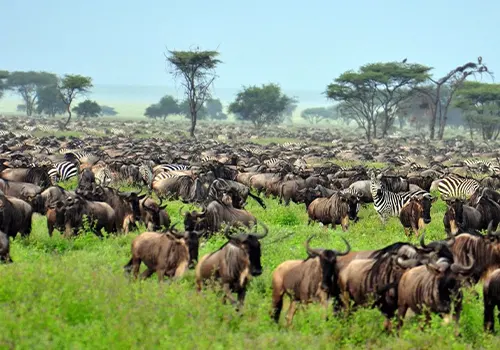
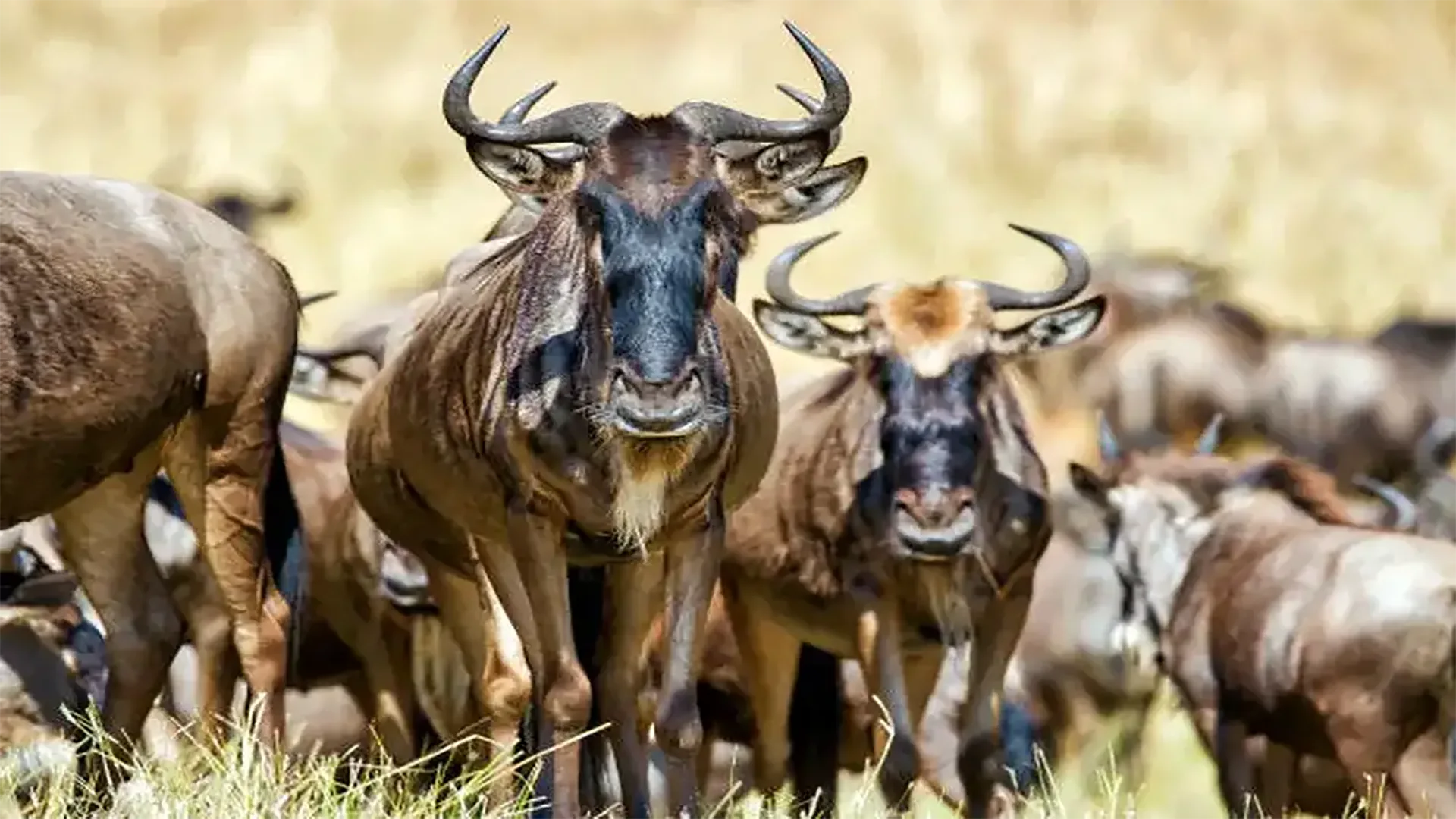
In the natural world, few events compare to the staggering reproductive burst of the Serengeti calving season. Across a brief three-week period in late January and February, more than half a million wildebeest calves enter the world on the volcanic grasslands of Ndutu—a rate of roughly 8,000 newborn calves every single day.
The Evolutionary Genius of Synchronized Birthing
Why do hundreds of thousands of animals choose to give birth simultaneously in the same geographical basin? The answer is predator satiation. If birthing were spread out across the entire year, resident lion prides, cheetahs, and hyena clans would easily consume nearly every newborn calf.
By flooding the ecosystem with an overwhelming surplus of hundreds of thousands of calves at once, predators quickly become completely gorged. Over 85 percent of all calves safely survive their critical early weeks, ensuring the future survival of the migratory species.
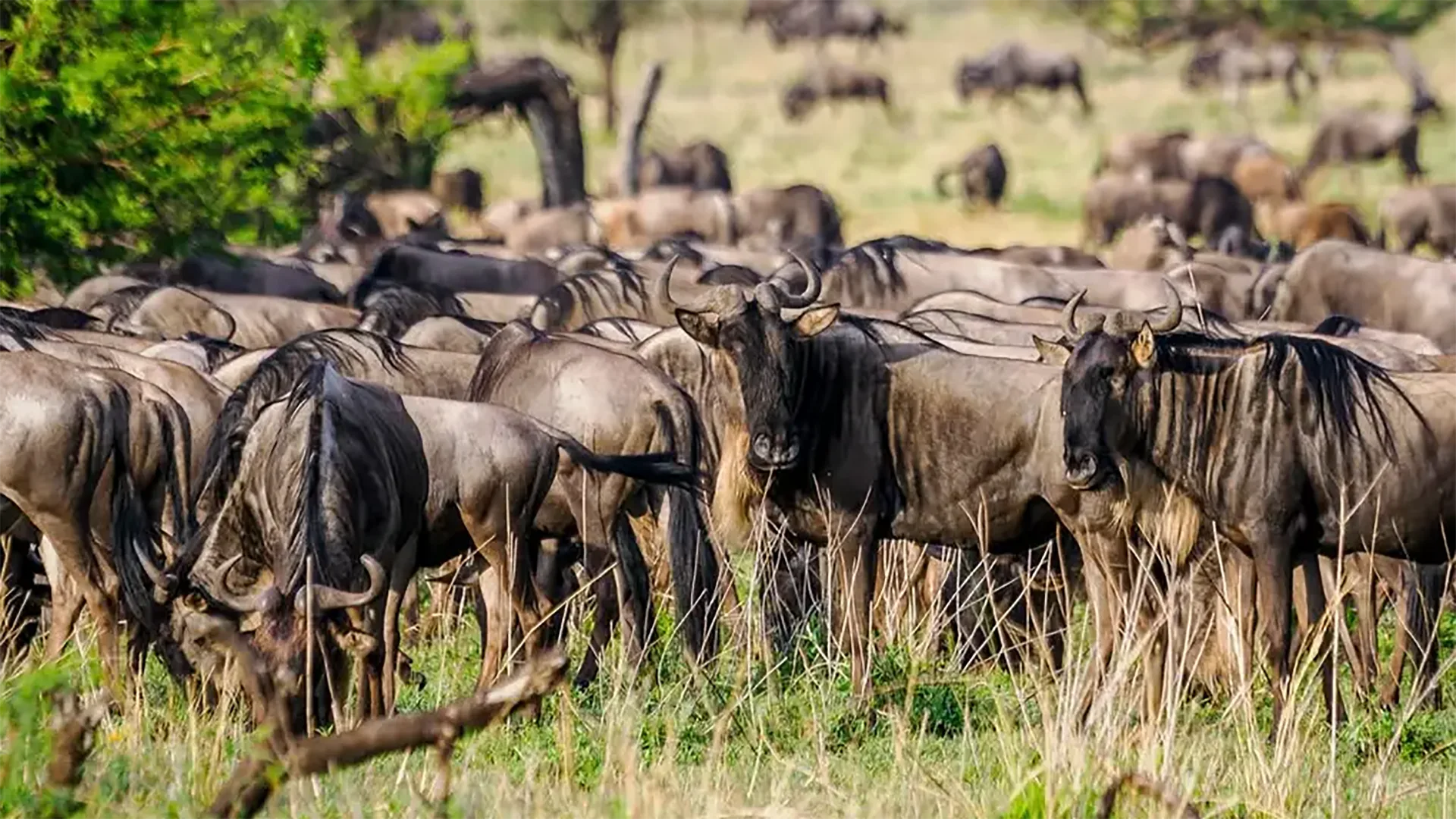 Life Begins on the Run: Within five minutes of birth, a newborn wildebeest calf is up and running with the herd.
Born on the Run: Five Minutes to Survival
A wildebeest birth is an astonishing biological marvel of speed. Labor typically lasts under thirty minutes. The moment the calf hits the grassy earth, the mother turns and vigorously licks the newborn clean, imprinting her unique maternal scent and vocal signature.
Within three to five minutes, the calf wobbles to its feet. Within ten minutes, it is suckling warm, antibody-rich colostrum. Within twenty minutes, it is capable of galloping at 30 mph alongside its mother, keeping pace with the moving herd.
The Maternal Defense Network
Mothers do not face predators alone. When a jackal or hyena approaches a birthing female, neighboring wildebeest and zebra mares close ranks, snorting aggressively and stamping hooves to create a protective buffer.
Observing a mother wildebeest fiercely charge a prowling hyena to defend her newborn calf is an intensely emotional demonstration of maternal courage that stays with travelers forever.
Experiencing the Miracle in Person
To witness births firsthand, our guides look for females that have separated slightly from the main herd, pacing nervously or lying down. With pop-up vehicle roofs and quiet engines, guests can observe the entire delivery from a respectful distance without causing stress to the mother.
It is nature at its most raw, tender, and triumphant—an absolute must-see for anyone passionate about wildlife.
Ready to Experience Tanzania?
Let our local safari specialists tailor a bespoke itinerary tailored to your preferred travel dates, pace, and wildlife dreams.

Written by Pastory Katwe
Senior Safari Guide & FounderExpert Tanzania safari guide with over a decade of tracking wildlife across the Northern Circuit national parks.
Plan Your Safari & Beach Escape
Let our local travel specialists design your personalized Tanzania itinerary with custom dates, luxury camps, and private guides.
Get a Free Customized Quote Chat on WhatsApp