Migration Overview & Key Facts
- Animals on the Move: 1.5M Wildebeest, 250,000 Zebras, 400,000 Gazelles
- Total Circuit Distance: ~1,000 kilometers annually
- Drama Highlights: Mara River Crossings & Ndutu Calving
- Best Time: Year-Round (Movement depends on rain & season)
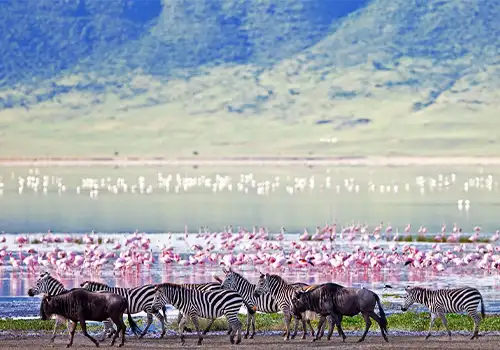
The Serengeti Great Migration is recognized as the largest overland wildlife movement on the planet. Millions of wildebeest, accompanied by hundreds of thousands of zebras and gazelles, march in an endless clockwise loop across the Serengeti ecosystem in search of fresh grazing pastures and life-giving water.
As a guide with over a decade of tracking herds across Tanzania, I always tell travelers: the Migration is not a single one-day event. It is an uninterrupted, living cycle that changes every month with the African rainfall.
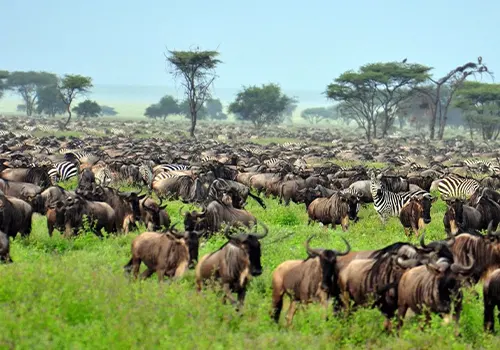 Endless columns of wildebeest stretching across the horizon in northern Tanzania.
Month-by-Month Migration Calendar: Where to Be and When
Planning a successful migration safari requires matching your travel dates with the exact sector of the Serengeti where the mega-herds will be concentrated:
| Months | Location | What You Will Witness |
|---|---|---|
| January – March | Southern Serengeti & Ndutu Plains | The Calving Season: Over 8,000 wildebeest calves born each day! Intense predator action as lions, cheetahs, and hyenas take advantage of the plains. |
| April – May | Central Serengeti & Moru Kopjes | The Green Season Trek: Herds gather into massive columns and begin moving north-west toward the Western Corridor across the Seronera Valley. |
| June – July | Western Corridor (Grumeti River) | The First River Crossings: Herds face the Grumeti River, braving monster Nile crocodiles and steep muddy banks before pushing towards the far north. |
| August – October | Northern Serengeti (Kogatende & Mara River) | The World-Famous Mara River Crossings: Peak safari season. Unbelievable adrenaline as tens of thousands of animals leap off rocky river cliffs into crocodile-infested rapids. |
| November – December | Lobo, Eastern Serengeti & Southern Journey | The Return South: Triggered by the short rains, herds surge south back towards Ndutu, completing their 1,000 km annual cycle. |
The Drama of the Mara River Crossings (July – October)
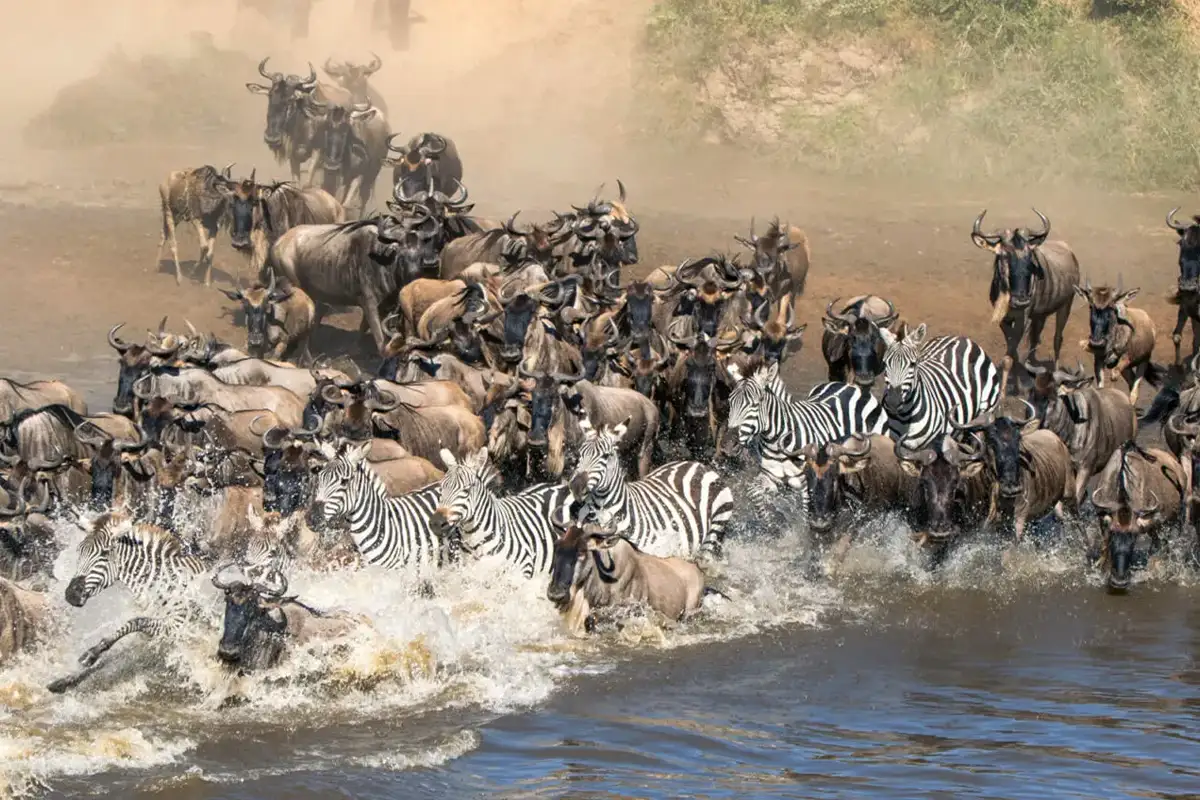
Standing on the banks of the Mara River in northern Serengeti is one of the most heart-stopping wildlife experiences on Earth. Herds gather in tens of thousands along the cliffs, nervously pacing back and forth for hours or even days. A single brave wildebeest will suddenly make the leap, triggering thousands behind in a frenzy of flying hooves, churning water, and survival instincts.
 High-drama survival: Herds braving the surging currents and Nile crocodiles of the Mara River.
The Miracle of the Calving Season (January – March)
For photographers and cat lovers, Ndutu in the southern Serengeti during January, February, and March is unbeatable. The short-grass plains are rich in phosphorus from volcanic ash, giving new mothers the nutrition they need to nurse. Over 500,000 calves are born within a brief 3-week window.
Because calves can run alongside their mothers within just 10 minutes of birth, the surrounding prides of lions, solitary leopards, and coalitions of cheetahs stage breathtaking hunting sequences in broad daylight across open terrain.
Expert Guide Tip: Choose Mobile Tented Camps
Because the wildebeest herds move throughout the year, booking a semi-permanent mobile tented camp that migrates twice a year ensures you sleep right in the heart of the action, minimizing long driving times and maximizing sunrise game drives!
Experience the Serengeti Migration in 2026/2027
Whether you wish to witness the river crossings in Kogatende or the calving season in Ndutu, our expert safari guides will build your dream itinerary with optimal lodge positioning.
View Migration Packages Chat on WhatsApp
Written by Pastory Katwe
Senior Safari Guide & FounderExpert Tanzania safari guide with over a decade of tracking wildlife across the Northern Circuit national parks.
Witness the Great Migration
Let our local travel specialists design your personalized Serengeti migration itinerary with private 4x4 Land Cruisers.
Get a Free Customized Quote Chat on WhatsApp