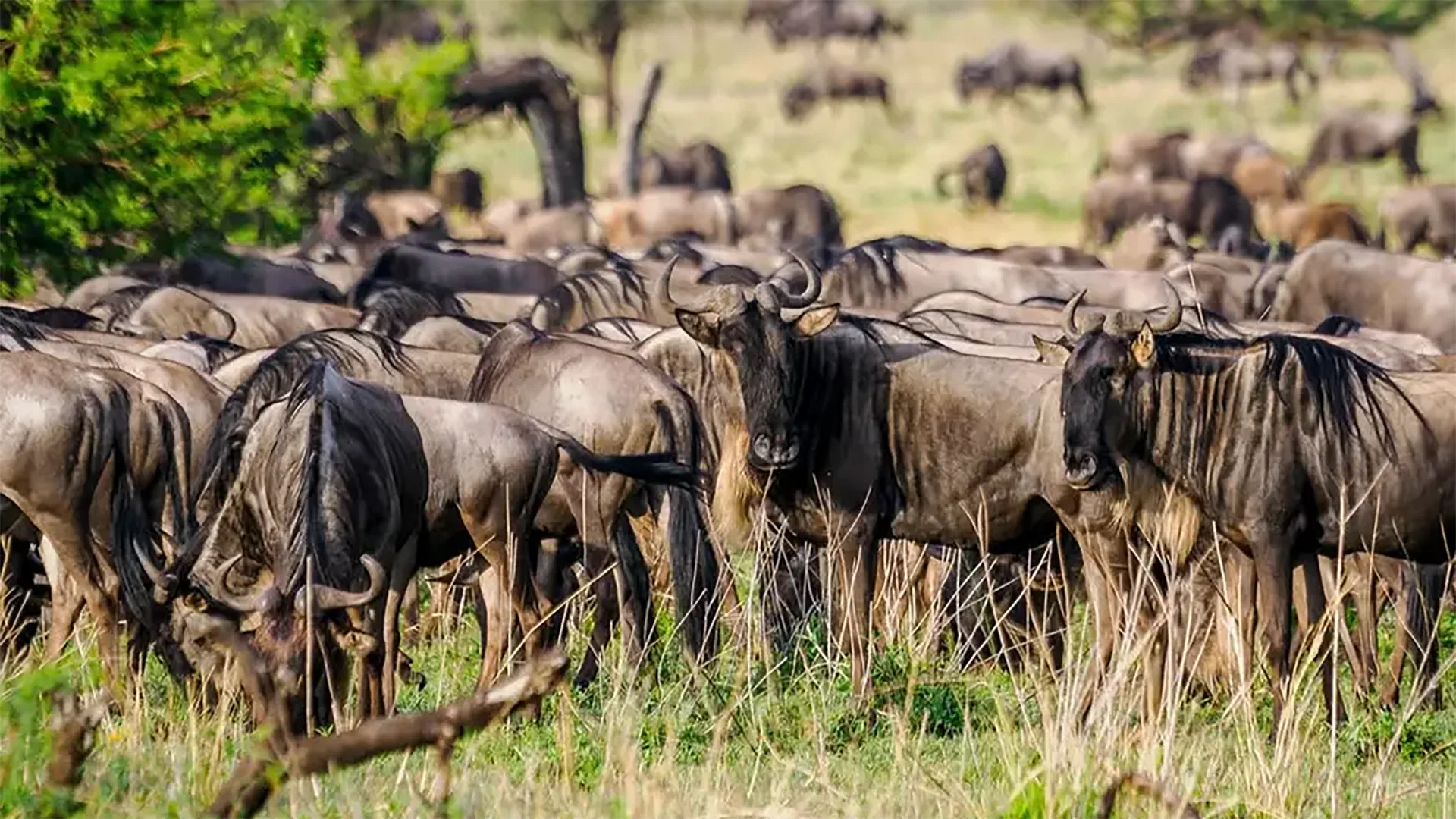
Calving Season Safari Overview
- Prime Location: Ndutu Plains & Southern Serengeti
- Peak Months: January, February & Early March
- Daily Births: Estimated 8,000 calves born per day
- Highlight Action: Cheetah, lion, and hyena hunting drama
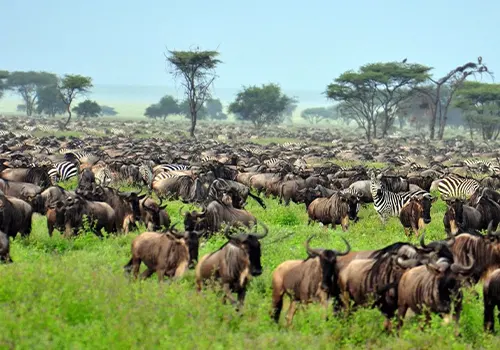
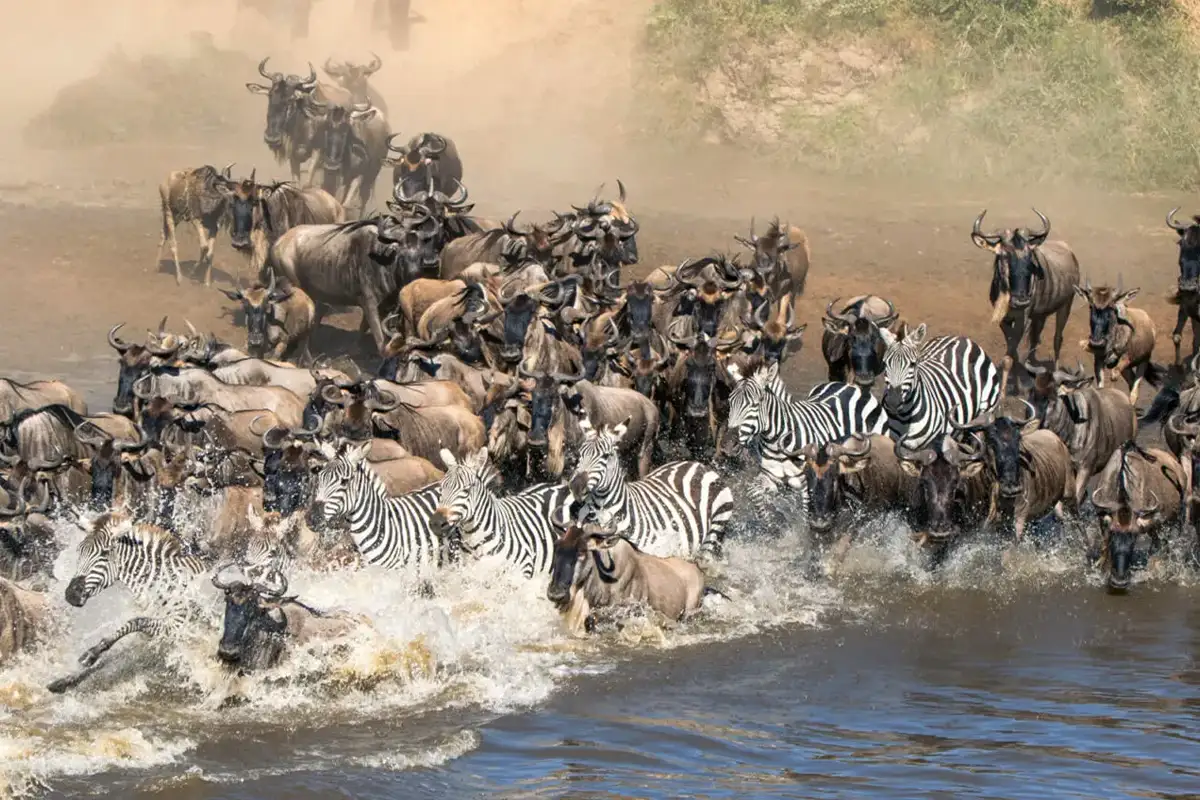
Every year between late December and March, the boundless short-grass plains of the Southern Serengeti and Ndutu transform into the world's most dramatic wildlife nursery. Over 1.5 million wildebeest, accompanied by hundreds of thousands of zebras and gazelles, congregate on nutrient-dense volcanic soils to give birth to the next generation of migratory herds.
The Miracle of the Synchronized Birth
The synchronized birthing phenomenon is nature's ingenious survival strategy. In a concentrated three-week window, usually in February, roughly 80 percent of all pregnant female wildebeest deliver their young. Within mere minutes of birth, a newborn calf is on its feet and keeping pace with the galloping herd.
This staggering abundance of prey overwhelms apex predators, ensuring that the vast majority of calves survive their vulnerable early weeks. For travelers seated in a private pop-up roof safari vehicle, witnessing a calf take its tentative first steps against a backdrop of golden horizon is an emotional and unforgettable safari milestone.
 Ndutu Plains: Over 8,000 wildebeest calves are born every single day across the short-grass plains.
Predator Drama on the Open Savannah
Where there are thousands of vulnerable newborns, Africa's top hunters follow in dense concentrations. The Ndutu plains become prime theater for big cats. Prides of lions take advantage of shallow drainage depressions to stalk unsuspecting herds, while leopards conceal themselves in the sprawling branches of umbrella acacia trees.
Cheetahs, which rely on sheer speed across flat open plains, thrive exceptionally well during calving season. It is common to witness mother cheetahs teaching their sub-adult cubs hunting techniques in broad daylight, offering wildlife photographers clean, unobstructed vantage points.
Why Off-Road Tracking Sets Ndutu Apart
Unlike the central and northern sectors of Serengeti National Park where vehicles must strictly adhere to established track networks, the Ndutu region falls within the Ngorongoro Conservation Area. This conservation boundary permits controlled off-road driving with experienced licensed safari guides.
This special concession allows your private 4x4 Land Cruiser to respectfully approach hunting scenes, newborn calves, and resting prides across the plains without being restricted by distance, making it East Africa's most versatile game-viewing arena.
Recommended Calving Season Itinerary
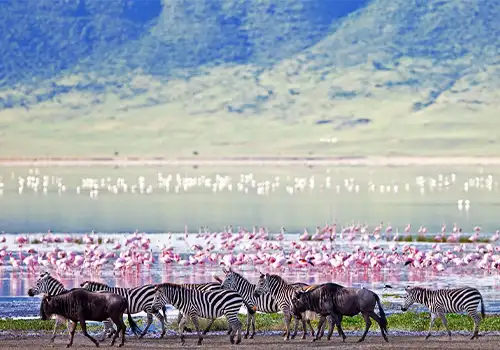
To experience the full breadth of Northern Tanzania during the green season, an ideal itinerary spans 6 to 8 days. Begin with a game drive in Tarangire National Park to admire resident elephant herds, descend into the world-famous Ngorongoro Crater floor for Big Five sightings, and spend three full days based in an intimate luxury tented camp nestled in the heart of Ndutu.
Evenings in the bush during calving season feature cool breezes, star-drenched skies, and the resonant sounds of thousands of wildebeest grunting across the nocturnal plains.
Ready to Experience Tanzania?
Let our local safari specialists tailor a bespoke itinerary tailored to your preferred travel dates, pace, and wildlife dreams.

Written by Pastory Katwe
Senior Safari Guide & FounderExpert Tanzania safari guide with over a decade of tracking wildlife across the Northern Circuit national parks.
Plan Your Safari & Beach Escape
Let our local travel specialists design your personalized Tanzania itinerary with custom dates, luxury camps, and private guides.
Get a Free Customized Quote Chat on WhatsApp