Ngorongoro Crater Quick Facts
- Caldera Depth: 610 meters (2,000 feet)
- Caldera Floor Area: 260 square kilometers
- Resident Wildlife: ~25,000 large mammals
- Rare Highlight: High density of endangered Black Rhinos
Often hailed as the Eighth Wonder of the World, the Ngorongoro Crater is the world's largest intact, unflooded volcanic caldera. Formed approximately two to three million years ago when a giant volcano exploded and collapsed in upon itself, today it stands as a natural wildlife sanctuary protected by 600-meter-tall emerald walls.
Descending the steep, winding rainforest trails of the crater wall into the sunken savanna below is an experience you will never forget. Within minutes of arriving at the crater floor, you enter a self-contained Eden where predator and prey co-exist in staggering concentrations.
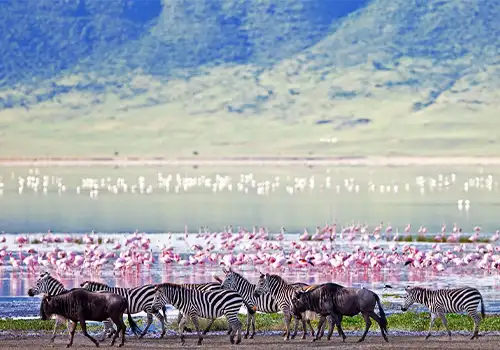 The breathtaking floor of the Ngorongoro Caldera: Home to over 25,000 large mammals.
Why Ngorongoro is the Ultimate Big Five Destination
There are very few places on the African continent where you can realistically spot all five members of Africa's iconic Big Five — lion, leopard, elephant, Cape buffalo, and black rhino — in a single 6-hour game drive:
- The Critically Endangered Black Rhino: Ngorongoro is one of the last remaining refuges in East Africa where wild black rhinos roam freely. Spotting a mother and calf grazing on the open plains is the undisputed crown jewel of an African safari.
- Lions with Extraordinary Density: The crater floor supports one of the highest concentrations of lions in Africa. Because food and water are permanent year-round, these prides do not migrate and can regularly be seen stalking zebra herds or resting near your safari vehicle.
- Giant Tusker Elephants: Old bull elephants with massive tusks that sweep the grass roam the Lerai fever-tree forest, taking shelter from the midday sun.
- Cape Buffaloes & Flamingos: Thousands of buffalo graze around the edges of Lake Magadi, an alkaline soda lake that shimmers pink with tens of thousands of lesser flamingos.
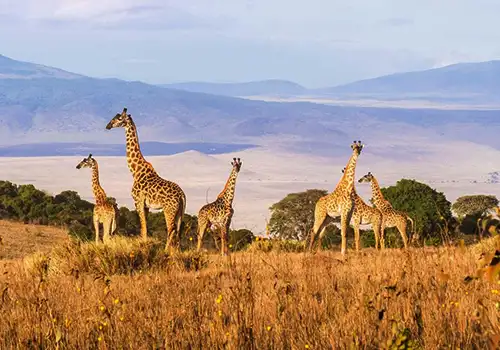 The dramatic high-altitude rim overlooking the sunken wildlife amphitheater.
Key Highlights to Explore in Ngorongoro
- Lerai Forest: A yellow-bark fever tree forest located in the south-western sector of the crater, famous for harboring elusive leopards, baboons, and majestic tusker elephants.
- Lake Magadi: A shallow salt lake in the center of the crater floor where thousands of pink flamingos feed on blue-green algae, surrounded by pods of pelicans and waders.
- Ngoitokitok Springs: A picturesque freshwater spring and picnic area where hippos wallow in the reeds, perfect for enjoying lunch while watching wildlife.
- Maasai Cultural Co-existence: The Ngorongoro Conservation Area is a pioneering UNESCO World Heritage site where traditional semi-nomadic Maasai pastoralists live side-by-side with wild animals.
Pro Safari Tip: Early Morning Descent
Crater descent gates open at 6:00 AM. Arriving at the rim before sunrise ensures you are among the first vehicles down on the caldera floor, catching lions on their morning patrol while soft golden light blankets the crater walls.
Ready to Explore the Ngorongoro Crater?
Combine Ngorongoro Crater with Serengeti and Tarangire for the ultimate Tanzania northern circuit adventure. Let our local team arrange your custom safari.
Request Custom Crater Tour Chat on WhatsApp
Written by Robin Tuni
Safari Specialist & Itinerary PlannerPassionate safari specialist at Lion Track Safari Tanzania, dedicated to designing custom wildlife adventures across the Serengeti, Ngorongoro Crater, and tropical Zanzibar getaways.
Plan Your Ngorongoro Safari
Let our local travel specialists design your personalized Tanzania safari with private 4x4 Land Cruisers.
Get a Free Customized Quote Chat on WhatsApp