Mara River Crossing Fast Facts
- Prime Season: July to October (Peak in August & September)
- Key Location: Kogatende & Northern Serengeti Riverbanks
- Natural Obstacles: Steep riverbanks, swift currents & Nile crocodiles
- Safari Setup: Fly-in directly to Kogatende Airstrip
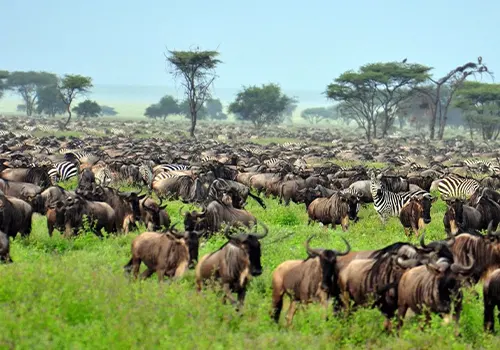
There is no wildlife spectacle on our planet as raw, chaotic, and exhilarating as the Great Migration's crossing of the Mara River. As hundreds of thousands of wildebeest and zebras gather along the steep, rocky riverbanks of Northern Serengeti, tension builds to a fever pitch before the first animal takes the daring leap into turbulent waters.
The Psychology of the Crossing
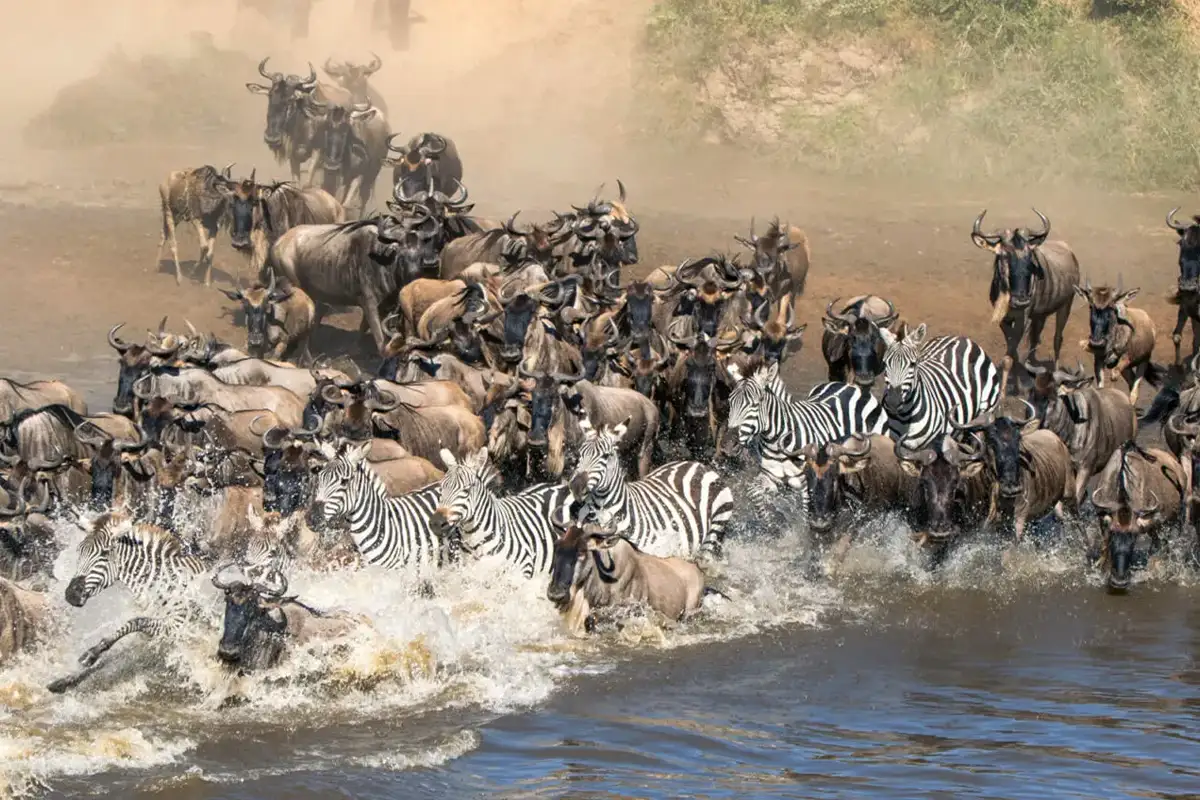
A Mara River crossing is never guaranteed at an exact hour; it is an incredible exercise in herd instinct and natural drama. Thousands of wildebeest will pace along the bank for hours, hesitating, testing the water's edge, and retreating in panic at the sight of a floating log or ripple.
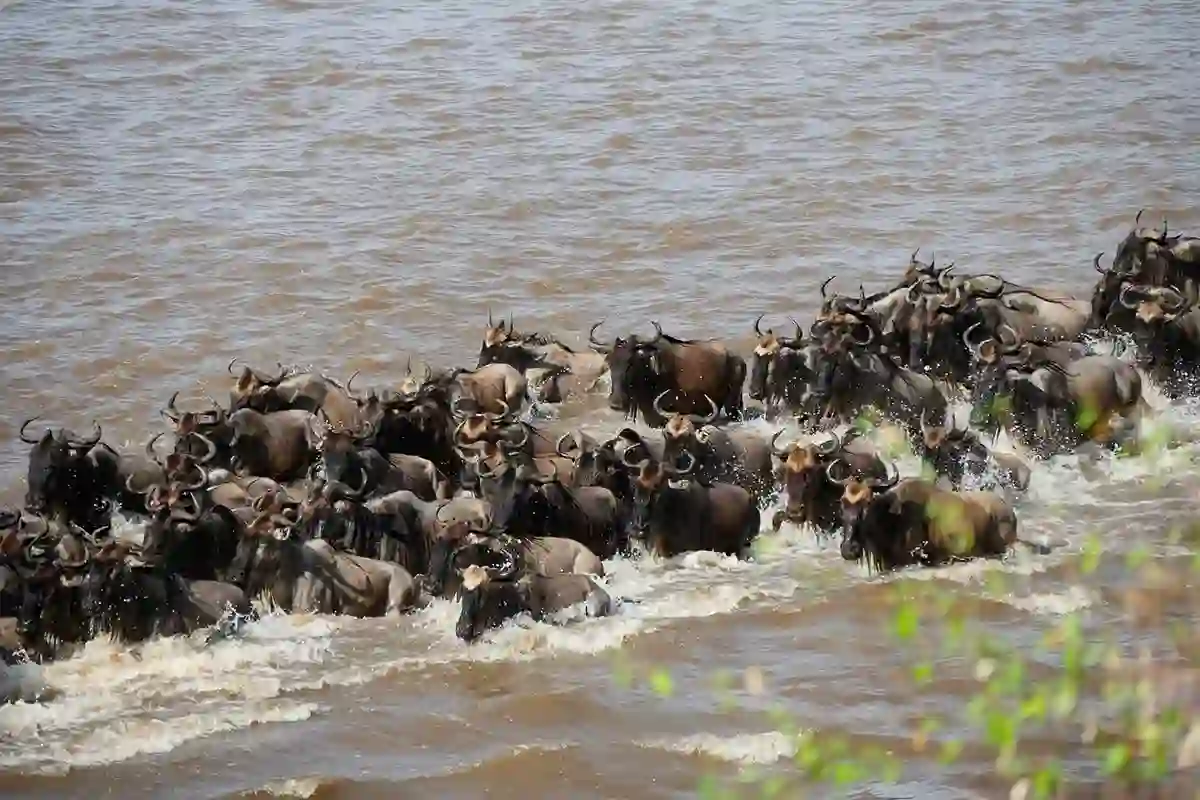
Eventually, driven by unrelenting herd pressure and thirst for fresh grazing on the opposite bank, a brave leader plunges forward. In an instant, the entire herd stampedes into the river, churning the water into froth with flying hooves and dust.
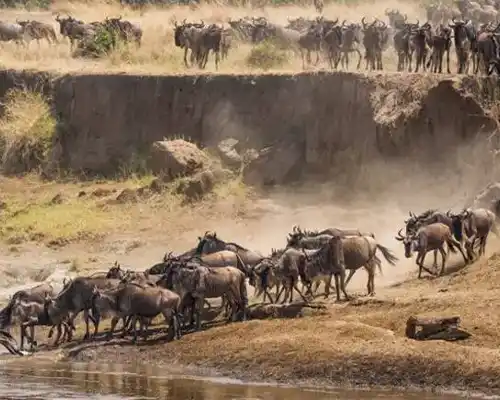 The Leap of Faith: Wildebeest plunge into the Mara River, braving strong currents and Nile crocodiles.
Nile Crocodiles and Riverbank Perils
Lurking beneath the chocolate-brown waters are Africa's largest Nile crocodiles, some exceeding five meters in length. Having fasted for months in anticipation of this seasonal feast, the crocodiles position themselves strategically in deep pools and narrow crossing channels.
Watching the sheer courage and resilience of the herds—mothers defending calves, calves fighting rushing currents, and young bulls scrambling up slippery mud embankments—is a humbling display of raw natural survival.
Why Kogatende Is the Place to Be
The Kogatende sector of Northern Serengeti offers over a dozen recognized crossing points. Rolling hills, granite kopjes, and scenic river bends provide breathtaking panoramas.
Staying in luxury tented camps situated along the Mara River allows you to be on the riverbank early in the morning without lengthy drives, maximizing your chances of witnessing multiple crossings during your stay.
Insider Tips for Wildlife Photographers
Capturing a river crossing requires high shutter speeds (at least 1/2000s) to freeze flying water droplets, a versatile zoom lens (such as a 100-400mm or 70-200mm), and boundless patience.
Our experienced driver-guides position the vehicle with the sun behind you whenever possible, allowing you to document the full emotional intensity of the crossing in stunning clarity.
Ready to Experience Tanzania?
Let our local safari specialists tailor a bespoke itinerary tailored to your preferred travel dates, pace, and wildlife dreams.

Written by Pastory Katwe
Senior Safari Guide & FounderExpert Tanzania safari guide with over a decade of tracking wildlife across the Northern Circuit national parks.
Plan Your Safari & Beach Escape
Let our local travel specialists design your personalized Tanzania itinerary with custom dates, luxury camps, and private guides.
Get a Free Customized Quote Chat on WhatsApp